

How Safe Is Breast Augmentation Surgery Today?
Deciding to change your body is a choice that requires clear information about medical advancements. Modern cosmetic surgery has advanced dramatically over the last few decades, offering super-advanced diagnostic protocols. Patients are now frequently asking about the risks, materials used, and expectations associated with these modern aesthetic enhancements. So let’s get into this, and learn how safe is breast augmentation surgery today.
Evaluating Modern Standards for Breast Implants
When we analyze breast implant safety, the discussion begins with medical devices. Regulatory agencies subject these devices to strict manufacturing standards before they ever enter an operating room.
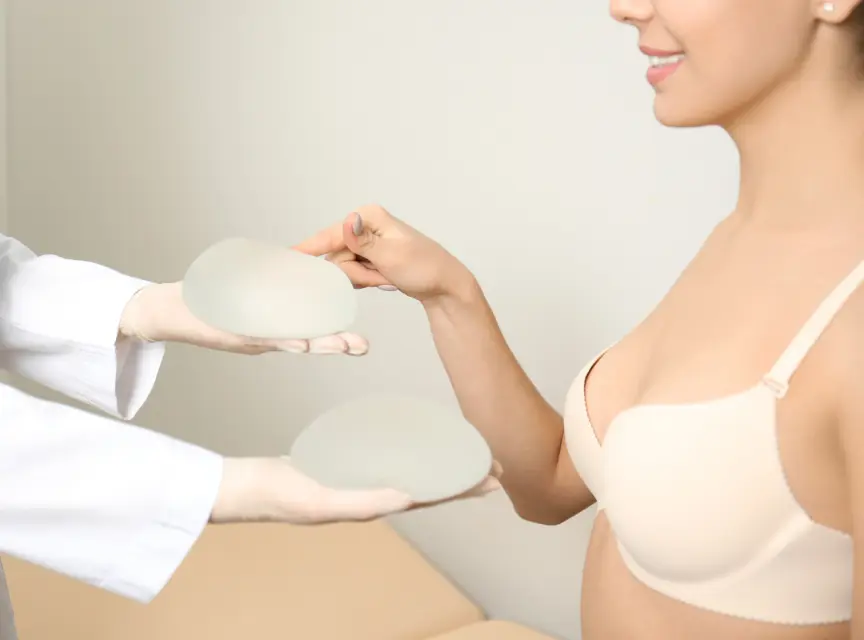
Today, women are choosing among different configurations based on their anatomical goals. The choice of breast implant materials dictates the look and feel of your chest and the maintenance steps you may need in the future. The two main options available to patients are:
- Silicone implants
- Saline implants
Both varieties feature an outer elastomer envelope but differ in their filling materials.
Saline breast implants arrive empty, and the plastic surgeon inflates them with sterile salt water during the surgical procedure. This allows for smaller initial incisions.
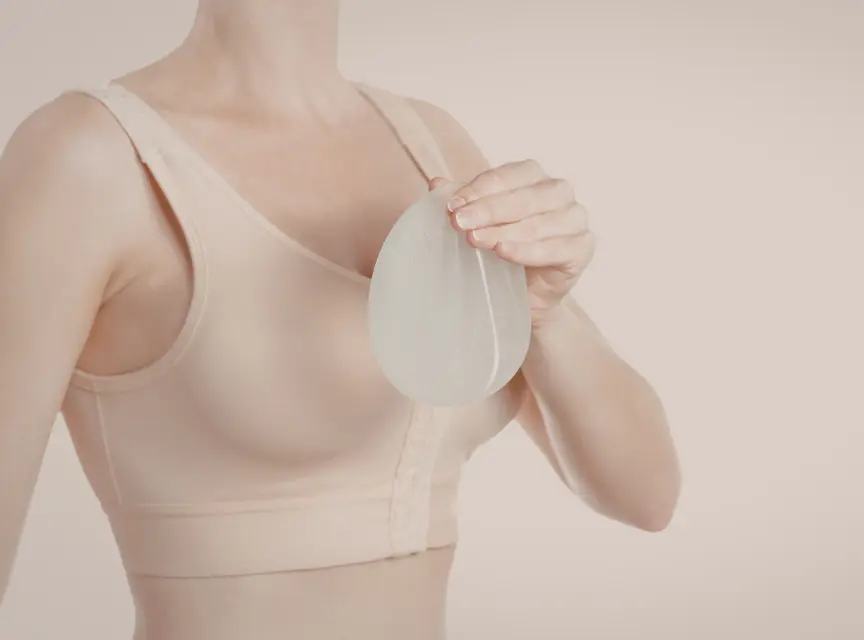
On the flip side, silicone breast implants arrive pre-filled with a silicone gel that mimics the density of natural tissue. This material is cohesive and forms a soft gelatin solid, minimizing migration if an implant ruptures.
Surgical Procedure & Placement
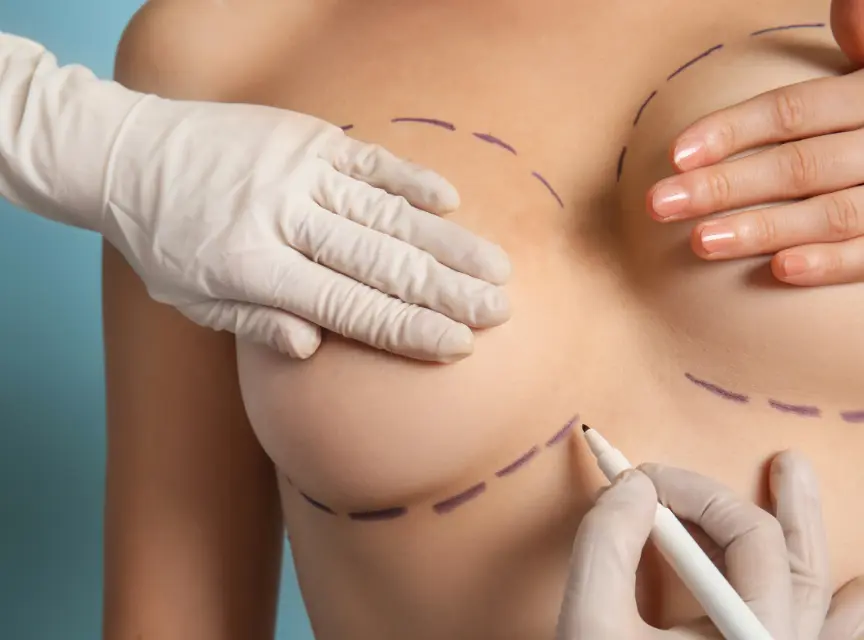
Undergoing breast augmentation is all about careful surgical planning and a clear understanding of anatomical placement. A board-certified cosmetic or plastic surgeon performs the implant surgery under general anesthesia in an accredited medical facility. The incision location varies based on your anatomy, but common points include the crease:
- Beneath the chest
- Around the lower edge of the nipple
- Within the armpit
During a standard breast augmentation, the physician creates a pocket to accommodate the device. This pocket sits either directly behind the breast tissue or beneath your pectoral chest muscles.
Placing the device beneath your muscle frequently minimizes the visibility of the device edges and gives some extra structural support. This specialized plastic surgery technique alters the size of your breast while attempting to maintain your natural contours.
The same techniques apply to breast reconstruction for women who need tissue restoration after oncological treatments. Let’s now learn how to identify risks and gain some information about capsular contracture.
Identifying Risks & Capsular Contracture
Every operation that is invasive carries inherent risks that you must evaluate before signing consent forms. While severe complications remain statistically low, localized physical reactions can occur. Our body naturally reacts to a foreign medical object by forming a protective capsule of scar tissue around it. In a standard scenario, this tissue remains soft and undetectable.
However, a condition known as “capsular contracture” develops when this internal tissue tightens abnormally around the device. This tightening squeezes the implant, causing the area to:
- Look distorted
- Feel firm
- Generate chronic discomfort
If the condition advances to a severe stage, a secondary surgical removal or breast implant revision becomes necessary. Beyond tissue tightening, you must monitor for a physical breast implant rupture.
A compromised saline-filled breast implant envelope results in quick deflation as your body absorbs the harmless saltwater liquid. On the flip side, a ruptured silicone gel-filled implant configuration generally goes unnoticed without imaging, a phenomenon which is known as a “silent rupture”.
Breast Implant Illness & Your Health
In recent years, medical research has focused heavily on systemic symptoms reported by a subset of breast implant patients. Some women describe experiencing:
- Unexplained fatigue
- Joint pain
- Brain fog
- Sleep disturbances

This collection of symptoms is referred to as “breast implant illness“. Because these manifestations mirror autoimmune conditions, researchers continue to study the exact biological connection.
When physical changes or systemic symptoms cause ongoing distress, women usually go for breast implant removal. Some women report a reduction in systemic symptoms following explanation, though clinical outcomes vary from person to person.
These medical devices are not considered lifetime devices. A patient should anticipate the likelihood of future surgery for device replacement or tissue adjustment as the body ages.
Reviewing Rare Lymphoma Risks & Textured Breast Implants
Discussions of Patient safety must also highlight a rare condition linked to specific device surfaces. This condition is not breast cancer, but rather a rare type of “T-cell lymphoma” that develops within the fluid or capsule surrounding the device. Known formally as “anaplastic large cell lymphoma”, this disease has a specific documented relationship with certain manufacturing styles.
Regulatory agencies discovered that textured breast implants, which feature a rough outer surface designed to grip internal tissue, increase the risk of developing breast implant-associated anaplastic conditions.
Specifically, “Cell Lymphoma BIA-ALCL” is predominantly linked to these high-surface-area textured devices. Due to these findings, smooth-walled devices have become the preferred standard for primary augmentations. When caught early, treating anaplastic large cell lymphoma involves the complete removal of the device as well as its surrounding capsule.
Always Consult a Board-Certified Specialist
An experienced and expert medical professional who prioritizes patient education, safety, and clinical excellence is the one you should always choose. Do you want to restore volume lost after pregnancy or balance breast asymmetry? Choosing the right plastic surgeon’s approach makes all the difference.
Visit Dr. Jim Brantner, MD, for Breast Augmentation
Contact Dr. Jim Brantner, MD, to explore your options and schedule a private consultation. If you want to discover the options available for your body, consider scheduling a consultation to discuss a Mommy Makeover, Liposuction, Tummy Tuck, Breast Augmentation, Breast Lift, Breast Reduction, or Breast Reconstruction.
For facial rejuvenation, options include Facelifts, Brow Lifts, and Eyelid Surgery. We also offer non-invasive skin enhancement through Microdermabrasion and Chemical Peels.
Call us now to book a consultation.
Frequently Asked Questions
Are breast implants safe to leave in forever?
What is breast implant illness, and how is it identified?
How does a plastic surgeon detect a silent rupture in silicone gel-filled implants?
What are the main differences between saline and silicone filling materials?
Where can I find an experienced plastic surgeon in Johnson City?


What Our Paients Are Saying About Us..

I had BR surgery 2months ago, I had the anchor procedure. I had absolutely no problems at all, no pain, very little swelling and the results are amazing, with the added bonus that my back , neck, and shoulders no longer hurt. Even at just 2months my scars are hardly noticeable. I would recommend Dr Brantner to anyone , he and his staff are wonderful . I could not have had a better experience.
I highly recommend Dr. Brantner to any woman that wants a breast augmentation. I'm very pleased with my results. they look amazing and feel wonderful. If I ever need anything done in the future, I will sure be back to see Dr. Brantner. Thank you so much for taking good care of me!
Dr. Brantner and his associates are all amazing! They are very kind, smart, and honest people I highly recommend Dr. Brantner. They took great care of me and my needs from start to finish.
friendly and he takes time to answer any questions I may have and was even so kind as to take a phone call from me and he alleviated all concerns in a kind, gentle manner. Dr. Brantner and his staff were absolutely fantastic!!!!!! They made me feel soooooo comfortable before and after surgery. I highly recommend him to anyone looking to have a breast reduction.
Dr. Brantner is a highly skilled surgeon. I am so happy that I decided to go to him. After being in a car accident my nasal bones and surrounding bones had to be reconstructed. The first surgeon who worked on me did a terrible job and had zero bedside manner. That is when I sought out Dr. Branner, he not only did an amazing job fixing everything the first Doctor messed up, he also made it look better than it did originally. I would highly recommend him to anyone.
testimonials
I went to Dr Brantner for reconstruction revision. I'm very, very pleased with the results. The staff were wonderful. I can't thank them enough for taking care of my surgery and making me feel and look so much better!!! I would highly recommend Dr Brantner.
Great surgeon! Every employee in the office is wonderful and helpful. I have nothing but great things to say about Dr Brantner, Win, and all of the staff.