We understand that every patient’s journey is unique. Some patients want major smoothing and facial recontouring, while others prefer the subtlety of non-surgical options. Other patients fall somewhere in the middle. We also understand that cosmetic procedures can put a strain on the wallet. That’s why we’ve started our monthly specials program, offering discounts on popular procedures throughout the year.
Our November Special offers patients 15% off S-Lift procedures. Which leaves the questions: “What is an S-Lift?” and “Is it right for me?”
What Is an S-Lift?
An S-Lift is, essentially, a “mini facelift.” It targets the lower face, lifting the cheeks and jowls for a more youthful appearance. It gets its name from the small, S-shaped incisions the surgeon places in front of the ear. The mini facelift is a popular choice for patients who want more youthful features, but aren’t ready for a full facelift. S-Lifts have shorter recovery times than the traditional facelift. They also cost less out-of-pocket. Because the S-Lift is less invasive than a full facelift and requires no general anesthesia, Dr. Brantner can perform the procedure in his office.
Am I a Good Candidate for a Mini Facelift?
To determine if an S-Lift is right for you, ask yourself these questions:
Am I dissatisfied with my appearance?
Do I have wrinkles or sagging skin on my cheeks or jaw?
Am I in relatively good health?
Can I take 3-5 days off work for recovery?
If you answered yes to these questions, take advantage of our S-Lift savings this November. Call Plastic and Reconstructive Surgery to schedule an S-Lift consultation with Dr. Brantner.
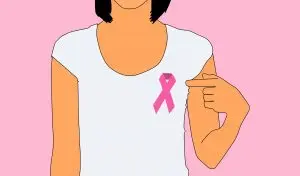
By now, everyone has seen pink ribbons decorating cars, signs, and “Walk for the Cure” t-shirts. October encourages communities to donate funds, spread awareness, and support women surviving breast cancer. But many women–even those living with the disease–are unaware of their options. We’re raising awareness this month by sharing these little-known facts about breast reconstruction.
4 Things You May Not Know about Breast Reconstruction
It’s covered by insurance. Many women are unaware of their breast reconstruction options. Reconstruction isn’t cosmetic surgery. In fact, thanks to The Women’s Health and Cancer Rights Act, insurance policies are required by law to cover the cost of both mastectomies and reconstruction procedures. This coverage also pays for surgery to restore symmetry in the event of a unilateral mastectomy (the removal of a single breast).
You don’t always need implants. When you talk to Dr. Brantner about breast reconstruction, he can recommend the best option based on your health, healing, and desired outcome. Many women get spacers at the time of their mastectomy, followed by saline or silicone implants. Others prefer taking tissue from the back or abdomen to reconstruct breast tissue. In the hands of a skilled physician, both techniques can result in full, natural-looking breasts.
There may be a time gap. Some women have the option of reconstructing the breasts at the same time as their mastectomy. This may allow their plastic surgeon to preserve the skin of the breast for a more natural-looking reconstruction. Other women wait for reconstructive surgery, either to give themselves time to consider their options or because of medical reasons like radiation therapy.
Reconstruction makes a big difference in emotional recovery. Each woman has her own experience, and no one can make her reconstruction decisions for her. But many patients find that breast reconstruction helps them overcome emotional hurdles during the recovery process. Reconstruction can go a long way towards helping you “feel like you again.”
October will be ending soon, but there’s still plenty of time to get involved in breast cancer awareness. Many fundraising opportunities will end with Breast Cancer Awareness Month, but there are always things you can do in Johnson City to support women fighting breast cancer.
5 Ways to Get Involved in Breast Cancer Awareness
Walk for a cure. Johnson City’s annual Making Strides Against Breast Cancer event takes place Sunday, October 30th in Founders Park. Registration is at 1pm and the walk kicks off at 3pm. Start a team or cheer others on as we raise funds, awareness, and support.
Know (and share) the facts. 1 in 8 women will be diagnosed with breast cancer in their lifetime. Research shows that a healthy diet and regular exercise can decrease your chances of getting breast cancer by 40%. Men are also at risk for breast cancer (1 in 1,000 chance), but women over 50 have the highest risk. If caught in its early stages, breast cancer has a 98% survival rate.
Learn about self-exams. Monthly self-exams are the most effective tool for catching breast cancer early. Learn how to perform an effective self-exam, looking for lumps and changes in the feel of breast tissue. Educate others about the importance of monthly breast self-exams.
Raise funds. Whether you donate, organize a fundraiser, or encourage your friends and family to give, breast cancer donations can significantly improve access to mammograms, increase awareness of the disease, and fund cancer research.
Volunteer your time. If you’re not personally affected by breast cancer, it’s easy to do your part in October, then forget about the need. Get involved in breast cancer programs in Johnson City year round. Volunteer your time to raise awareness, drive women to mammograms and doctor’s appointments, and educate women about their treatment and reconstruction options.
Do you have a question about breast cancer screening, support, or reconstruction options? Call Dr. Brantner’s East Tennessee Reconstructive Surgery Center.
There could be a silent killer lurking in your home. It’s not a villain from a horror movie or a creepy creature that crops up every Halloween; it’s your own skin. Skin cancer can lurk unnoticed until it has a deadly hold on you. But as with any fright, a little preparation is the key to fighting it off.
Types of Skin Cancer
Skin cancer is the most common kind of cancer, affecting 1 million patients annually. But not all skin cancers are created equal. There are three major types of skin cancers:
Basil Cell Carcinoma: The mostcommon type of skin cancer. This cancer grows on the exposed part of the skin in response to UV exposure. It typically will not spread to other parts of the body, and can be cured if caught early.
Squamous Cell Carcinoma: The second most common type of skin cancer. Found on parts of the body with sun exposure, it can also spread to bones, tissues, and nearby lymph nodes. Easy to treat if caught early, but harder to treat once it spreads.
Melanoma: The least common type of skin cancer, but the most dangerous. An aggressive skin cancer, melanoma often spreads to other parts of the body and can be fatal if not treated early.
Recognizing Melanoma
Moles, skin growths, and and colored spots are usually nothing to worry about, but atypical moles can be cause for concern. Regular self-checks are the key to catching skin cancer early. When deciding whether to follow up with a doctor about a mole, look for these signs:
Asymmetry: The two halves to not match.
Border: Benign moles have smooth edges, but malignant moles are likely to have uneven or scalloped edges.
Color: Malignant moles often have multiple colors (colors may include white, red, or blue in addition to brown, tan, or black)
Diameter: Moles larger than a pencil eraser should be examined by your doctor.
Evolving: If the size, shape, or color of a mole begins to change, make an appointment with your physician.
Moles don’t need to be something to fear. Check your moles regularly, and always contact a certified plastic surgeon to remove any skin cancer threats before they get worse.
New body, new wardrobe. Having a breast augmentation opens up a new world of fashion choices, and most women can’t wait to hit the stores. But as tempting as it is to revamp your entire wardrobe on Day 1, shopping after surgery is more complicated than one might think. Read our post-breast augmentation shopping tips to guarantee a great fit.
Tips for Shopping after a Breast Augmentation
Give it time. You may be tempted to hit the stores the second you’re back on your feet, but patience pays off. Dr. Brantner recommends you go bra-free for the first few weeks to give your implants time to settle. Once you’re back in a comfortable (doctor-approved) bra, stick to buying the basics. It may feel like you’re 100% healed, but there may be some residual swelling. We recommend you wait a few months before shelling out for a new drawer full of bras.
Get fitted. The simplest way to find your new bra size is to get fitted by a professional. But beware: many lingerie stores have notoriously bad practices for fitting bras. We recommend Nordstrom’s bra fitting guide to find the right size.
Remember: size doesn’t matter. You and your physician may have decided on a C-cup, but the bra industry doesn’t have consistent sizing. We’ve had many patients who bought bras in size B, C, and D cups that all fit perfectly. Wear a bra that fits comfortably, and don’t worry if you wind up in “the wrong” cup size.
Talk to your doctor. He’ll be able to tell you when to start shopping for new bras, what to wear during the healing process, and what shopping pitfalls other patients have faced after getting breast implants.
If you’re considering a breast augmentation, it’s important to find a board-certified plastic surgeon you can trust. Call Dr. Brantner’s office to schedule your breast augmentation consultation today.


 An S-Lift is, essentially, a “mini facelift.” It targets the lower face, lifting the cheeks and jowls for a more youthful appearance. It gets its name from the small, S-shaped incisions the surgeon places in front of the ear. The mini facelift is a popular choice for patients who want more youthful features, but aren’t ready for a full facelift. S-Lifts have shorter recovery times than the traditional facelift. They also cost less out-of-pocket. Because the S-Lift is less invasive than a full facelift and requires no general anesthesia, Dr. Brantner can perform the procedure in his office.



 Get fitted